Products
Corporate
About
Contacts
VN
CN



22 Apr, 2026
Dried Mango Color: Yellow, Orange and Brown Buyer Checks

Dried mango can look yellow, orange or brown, and buyers often want an assortment with a consistent appearance. The useful question is how a proposed batch compares with the product description and approved sample. A colour name on its own does not establish the fruit’s flavour, age or safety.
This guide explains what to ask about yellow, orange and brown dried mango, how to compare samples and how to record an appearance requirement for a wholesale order. Use the colour check alongside the ingredients, pack, lot information and your normal product assessment.
This guide explains what to ask about yellow, orange and brown dried mango, how to compare samples and how to record an appearance requirement for a wholesale order. Use the colour check alongside the ingredients, pack, lot information and your normal product assessment.

Content
Use Color as a Product and Sample Check
Start with the product description
Identify the item you are comparing: fruit variety if specified, ingredients, added sugar or other treatments, slice format and proposed pack. Compare like products rather than treating all yellow pieces as one grade and every darker piece as another.
Ask which sample represents the quotation and record its product or lot reference. A catalogue photograph introduces an item; an agreed reference sample is more useful when deciding whether a later delivery has the appearance you ordered.
Identify the item you are comparing: fruit variety if specified, ingredients, added sugar or other treatments, slice format and proposed pack. Compare like products rather than treating all yellow pieces as one grade and every darker piece as another.
Ask which sample represents the quotation and record its product or lot reference. A catalogue photograph introduces an item; an agreed reference sample is more useful when deciding whether a later delivery has the appearance you ordered.
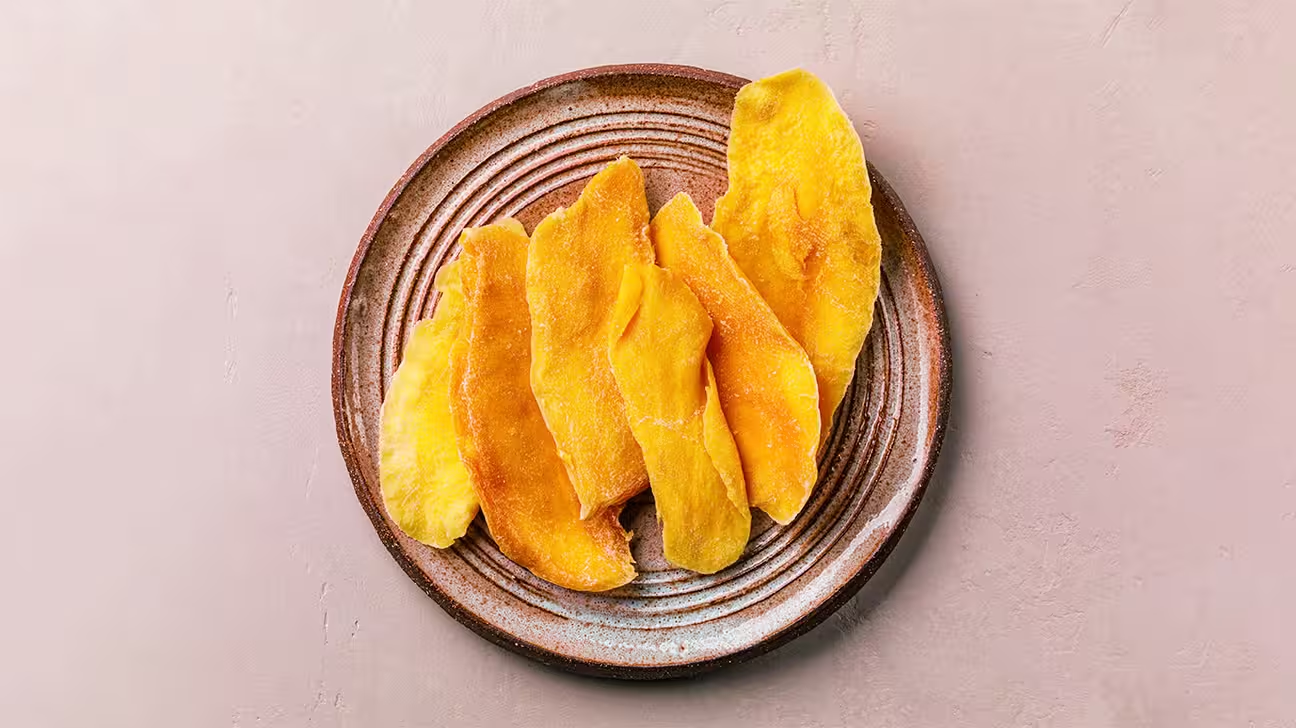
Why the appearance can differ
Research on dried mango shows that the starting fruit and drying conditions can influence colour. A study of preharvest and postharvest effects examined cultivar, maturity and ripening conditions, while a study of drying schemes examined how maturity and drying conditions affected colour changes in sulfite-free mango.
For a purchase, ask the supplier which product, recipe and processing description apply to the offered item. Do not infer the ingredients, sugar level or treatment from a yellow, orange or brown photograph.
Check the sample you will actually sell
View several pieces under the same lighting and against a neutral background. Record the range of colours, consistency and visible differences from the approved reference. Assess texture and aroma as part of the same review, and let your quality team decide how an unexplained change should be investigated. Colour is one observation in that review.
Research on dried mango shows that the starting fruit and drying conditions can influence colour. A study of preharvest and postharvest effects examined cultivar, maturity and ripening conditions, while a study of drying schemes examined how maturity and drying conditions affected colour changes in sulfite-free mango.
For a purchase, ask the supplier which product, recipe and processing description apply to the offered item. Do not infer the ingredients, sugar level or treatment from a yellow, orange or brown photograph.
Check the sample you will actually sell
View several pieces under the same lighting and against a neutral background. Record the range of colours, consistency and visible differences from the approved reference. Assess texture and aroma as part of the same review, and let your quality team decide how an unexplained change should be investigated. Colour is one observation in that review.
Compare Yellow, Orange and Brown Samples
Yellow: compare the proposed range
A supplier may offer pale yellow, golden or more saturated yellow pieces. Compare the sample with the description and with the reference for that exact item. Check whether the colour is reasonably consistent across pieces and whether the pack or photographs change how it looks.
Taste the sample and inspect the ingredient information separately. Bright yellow alone does not establish sweetness, freshness or a higher grade.
A supplier may offer pale yellow, golden or more saturated yellow pieces. Compare the sample with the description and with the reference for that exact item. Check whether the colour is reasonably consistent across pieces and whether the pack or photographs change how it looks.
Taste the sample and inspect the ingredient information separately. Bright yellow alone does not establish sweetness, freshness or a higher grade.

Orange: identify the product behind the shade
A deeper orange appearance may belong to a different starting fruit or processing outcome. Ask about the offered variety, formulation and lot rather than assuming orange means a sweeter or premium product.
If you are comparing two retail lines, prepare a sample record for each. Evaluate the flavour, texture, piece size and proposed pack alongside the colour, then choose the product that fits your assortment.
A deeper orange appearance may belong to a different starting fruit or processing outcome. Ask about the offered variety, formulation and lot rather than assuming orange means a sweeter or premium product.
If you are comparing two retail lines, prepare a sample record for each. Evaluate the flavour, texture, piece size and proposed pack alongside the colour, then choose the product that fits your assortment.

Brown: check the reference and any change
Brown areas deserve a product-specific comparison. Ask whether that appearance is represented in the supplier’s sample and description, and whether it has changed since packing or between lots. A brown shade does not prove that the item is unsulfured, preservative-free or old.
When the delivered appearance differs from the reference, record the lot, pack condition and storage history available to you. Photograph the difference under consistent conditions and ask the supplier and your quality team to review it before an acceptance decision. Agree any permitted variation for the particular order rather than borrowing a percentage from an unrelated product.
Brown areas deserve a product-specific comparison. Ask whether that appearance is represented in the supplier’s sample and description, and whether it has changed since packing or between lots. A brown shade does not prove that the item is unsulfured, preservative-free or old.
When the delivered appearance differs from the reference, record the lot, pack condition and storage history available to you. Photograph the difference under consistent conditions and ask the supplier and your quality team to review it before an acceptance decision. Agree any permitted variation for the particular order rather than borrowing a percentage from an unrelated product.

Agree a Color Reference for the Order
Make the appearance requirement repeatable
Keep an agreed sample or reference photographs with the product specification. Record the product and lot, date of assessment, light conditions and any sample preparation. Describe the range you have accepted and how differences will be reviewed at receipt.
If your team uses instrument measurements, agree the method and acceptance criteria in the specification. A measured colour value still needs the context of the product being supplied.
Questions for yellow, orange and brown samples
Use the table to organise the discussion with a supplier and compare each proposed item with its own approved reference.
Keep an agreed sample or reference photographs with the product specification. Record the product and lot, date of assessment, light conditions and any sample preparation. Describe the range you have accepted and how differences will be reviewed at receipt.
- Product identity: the exact recipe, format and pack covered by the reference.
- Sample: how it relates to the proposed production or shipment lot.
- Appearance: the reference and the product-specific variation agreed with the supplier.
- Receipt: who checks the delivery and records a mismatch.
- Other checks: ingredients, texture, aroma, pack condition, date and lot information, and the quality checks required for your project.
If your team uses instrument measurements, agree the method and acceptance criteria in the specification. A measured colour value still needs the context of the product being supplied.
Questions for yellow, orange and brown samples
Use the table to organise the discussion with a supplier and compare each proposed item with its own approved reference.
Color
Appearance
Supplier Question
Sample Comparison
Buying Decision
Yellow
Pale to golden yellow; observe the actual range
Which product, recipe and lot does this sample represent?
Compare several pieces with the agreed reference under the same light
Choose from the complete sample, specification and pack review
Orange
Deeper orange; describe consistency and differences
How does this item differ from the yellow product offered?
Compare each product with its own approved sample
Evaluate flavour and texture separately from the colour
Brown
Brown areas or a darker overall shade; record the pattern
Is this appearance part of the reference, or a change to investigate?
Check the reference, lot, pack condition and available storage history
Refer an unexplained mismatch for supplier and quality-team review
Request a Dried Mango Sample for Your Range
Start with the MR.VIET dried-fruit range and identify the item and pack you want to evaluate. For a business order, compare the sample with the quoted specification and keep the product, lot and appearance reference in your buying file.
Send the wholesale team your destination, sales channel, dried-mango requirements, preferred pack and expected quantity. Include the appearance you are looking for so the team can discuss the available products and sample arrangement with you.
Send the wholesale team your destination, sales channel, dried-mango requirements, preferred pack and expected quantity. Include the appearance you are looking for so the team can discuss the available products and sample arrangement with you.

Read more